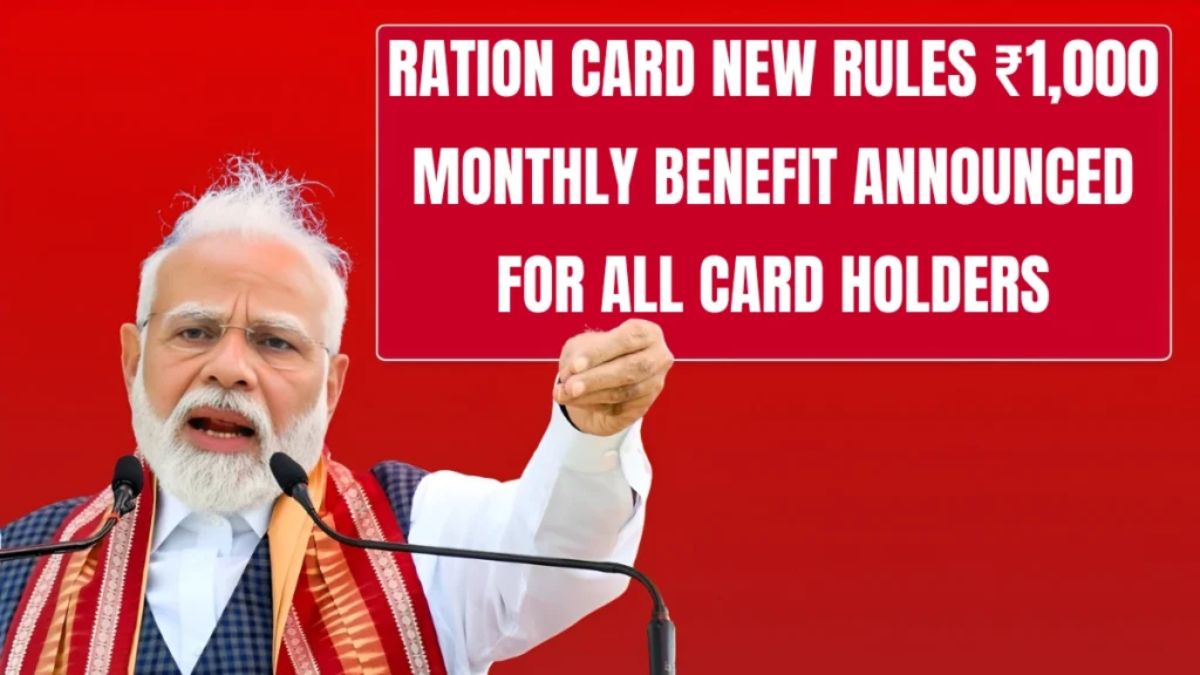
Ration Card New Rules 2026 have started with a major announcement that directly impacts millions of households across India. The government has introduced a ₹1,000 monthly benefit for all ration card holders, making it one of the most inclusive welfare steps in recent years. The goal is to provide financial relief, improve food security, and support families struggling with rising living costs.
Direct Cash Support for Families
The main highlight of the new rules is the ₹1,000 monthly cash benefit that will be transferred directly into the bank accounts of ration card holders. Unlike earlier schemes that were limited to specific groups, this benefit covers everyone. The government believes direct transfers will help households manage expenses better and reduce dependence on loans or credit.
Boosting Household Financial Stability
For many families, especially in rural and semi-urban areas, ₹1,000 per month can make a noticeable difference. It can help pay for groceries, school needs, or medical expenses. This steady financial support aims to reduce stress caused by inflation and allow families to plan their monthly budgets more confidently.

Universal Coverage Across All Ration Cards
One of the most important aspects of the 2026 ration card rules is inclusivity. Whether a family holds an Antyodaya card, a Priority Household card, or any other type, the benefit applies equally. This universal approach removes confusion about eligibility and reflects equal treatment for all beneficiaries.
Simple and Transparent Payment Process
The process to receive the ₹1,000 monthly benefit has been kept simple. Beneficiaries only need to ensure their ration card is linked with Aadhaar and a valid bank account. Once verified, the amount will be credited automatically every month, reducing paperwork, delays, and chances of corruption.
Strengthening Food Security Programs
Ration cards were traditionally used for subsidized food grains. Under the new rules, they now also provide direct financial assistance. This combined approach strengthens food security by giving families both affordable food and cash support, allowing them flexibility in managing other essential needs.

Strong Impact on Rural Communities
Rural areas are expected to benefit the most from this scheme. In villages where income is seasonal and uncertain, a fixed monthly benefit brings stability. Farmers, laborers, and small traders can rely on this support during slow periods, which may also reduce migration to cities.
Relief Against Rising Inflation
With prices of vegetables, cooking oil, and daily essentials rising steadily, the ₹1,000 monthly benefit acts as a financial buffer. While it may not cover all expenses, it provides meaningful relief that helps families manage inflation more effectively.
Encouraging Digital Inclusion
The scheme promotes digital inclusion by encouraging people to link ration cards with Aadhaar and bank accounts. This brings more citizens into the formal banking system and helps them become comfortable with digital payments, making it easier to access other government schemes.

Transparency Through Technology
Technology plays a central role in the new ration card rules. Digital systems are used to track beneficiaries, monitor transfers, and prevent duplication. This ensures money reaches the right person at the right time, improving trust in welfare programs.
Positive Ripple Effect on Local Markets
With extra cash in hand, families are likely to spend more in local markets. This increases demand for goods and services in villages and small towns, benefiting shopkeepers, vendors, and local businesses, and creating a positive economic ripple effect.
Empowering Women in Households
Women often manage household budgets, and this scheme supports them directly. A regular monthly amount allows better planning, improved nutrition, and smarter financial decisions, strengthening women’s role in household financial management.

Government’s Vision for Inclusive Welfare
The new ration card rules reflect a broader vision of inclusive welfare. By combining food support with cash assistance, the government addresses both immediate needs and long-term stability, focusing on empowerment rather than just subsidies.
Challenges in Implementation
Despite its benefits, challenges remain. Linking all ration cards with Aadhaar and bank accounts, especially in remote areas, may take time. Awareness campaigns and strong monitoring will be essential to ensure smooth and fair implementation.
Public Response to the Announcement
The announcement has received widespread appreciation. Families see it as timely relief, while experts call it a progressive welfare move. Social media reactions highlight strong public support for the scheme’s inclusive nature.
Long-Term Economic Benefits
Over time, the scheme could strengthen the economy by reducing dependence on informal credit and increasing household purchasing power. Families may invest more in education, healthcare, and small businesses, supporting long-term growth.
Final Word
The Ration Card New Rules 2026 represent a major shift in India’s welfare approach. The universal ₹1,000 monthly benefit promotes inclusivity, transparency, and financial stability. Despite implementation challenges, the initiative aims to improve lives and build a stronger, more resilient nation.
Disclaimer
This article is for general informational purposes only. Government schemes, eligibility conditions, and benefit amounts are subject to change. Readers should verify details through official government notifications or authorised portals before making any financial or personal decisions based on this information.